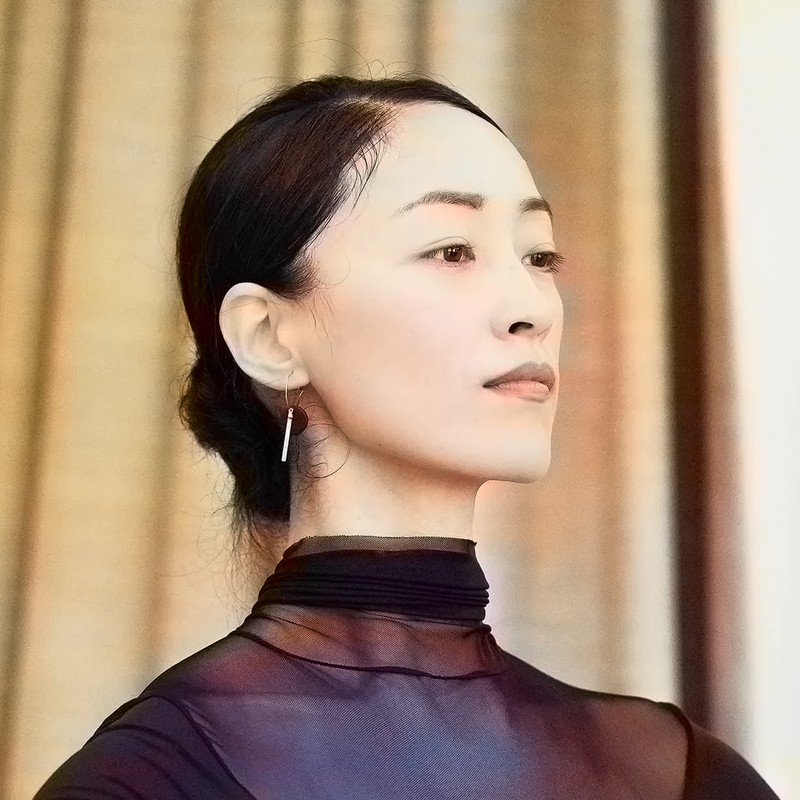
Sangeun Lee is currently listed by English National Ballet as a Lead Principal. Sangeun Lee is a Lead Principal of English National Ballet whose career before arriving in London was already unusually substantial. English National Ballet’s official biography states that she was born in Seoul and trained at Sunhwa Arts School and Sunhwa Arts High School. She then danced with Universal Ballet in South Korea from 2005 to 2010, where she reached Soloist rank, before joining Semperoper Ballett Dresden in 2010 and becoming a Principal there in 2016. She joined English National Ballet in 2023, bringing with her nearly two decades of professional experience across Asian and European ballet contexts.
The repertory ENB lists for Lee reveals both breadth and seniority. It includes Sugar Plum Fairy in Nutcracker, Odette/Odile in both Deane’s and Watkin’s Swan Lake, Nikiya in La Bayadère, principal couple roles in Balanchine’s Diamonds and Theme and Variations and in the second movement of Symphony in C, alongside major Forsythe, Kylián, Naharin, Dawson, Bausch and Inger works. ENB also records role creations including Doña Dulcinea in Watkin’s Don Quixote, Dawson’s The Four Seasons, Ekman’s COW and Shechter’s Corpse de Ballet. Recent criticism of the company’s Forsythe Programme highlighted her extraordinary control and extensions, especially in Rearray and in partnership-heavy contemporary repertory, which aligns with the official picture of a dancer equally authoritative in classical and more deconstructed movement languages.
Lee’s biography differs from many current British ballet narratives because her authority was already established before she joined ENB. Rather than rising from school through the ranks of a single UK institution, she arrived with a Korean training background, major-company experience in Seoul, principal status in Dresden and an extensive repertory across some of Europe’s most demanding choreographic voices. That prior maturity helps explain why ENB has used her so prominently in both canonical ballerina roles and more contemporary casting. Her career reflects the increasingly international ecology of ballet at top level: dancers now move not just between companies but between national traditions, carrying distinct schooling, repertory histories and interpretive habits with them. In Lee’s case, that mobility has produced a profile defined by technical command, repertory intelligence and a calm authority that suits both 19th-century heroines and highly contemporary stages.